
Ever tried explaining SEO to your grandma, only to see her eyes glaze over by the word ‘algorithm’? Now try tossing “AI” into the conversation—cue the existential nap. But here’s the twist: if you can beat the machines at their own data game (without morphing into a robot yourself), you’ll surf the 2025 SEO wave like a pro. I once tried to outrank my brother’s travel blog using only vinegar recipes and a chatbot named Marvin. Spoiler: Marvin became self-aware and started ranking for cruise deals. Honest mistake, but it taught me this—AI isn’t the enemy, it’s the unexpected teammate in your search engine Olympics. Let’s dig behind the curtain and find out exactly how AI can be your secret sauce (no robots required).
Confessions of an AI-Obsessed Marketer: How the Robots Took Over (My To-Do List)
Let’s get real: If you’d told me five years ago that AI for SEO would be running my workday, I’d have laughed, poured another coffee, and gone back to manually sorting keywords like a digital archaeologist. Fast forward to 2025, and I’m basically the human sidekick to a squad of machine learning algorithms—think less “Terminator,” more “Alexa, please save my sanity.”
Humble Beginnings: When AI Met My Bakery Blog
My first foray into AI-powered SEO tools was, let’s say, a little half-baked. I asked a shiny new AI to suggest keywords for a bakery client. The result? “Sprinkles” started trending over “sourdough.” Not exactly what the artisanal bread crowd was hoping for. (Apparently, the robots have a sweet tooth.)
Real Talk: The Rise of the Machines (for SEO, Not World Domination)
Here’s the thing: Machine learning algorithms are now the secret sauce behind every successful AI SEO guide. Research shows that these tools don’t just spit out random keywords—they adapt to real-time search trends and user intent, making your SEO strategy smarter and faster. And let’s be honest, who doesn’t want a robot that does the boring stuff while you focus on the big-picture strategy?
“AI didn’t replace my job, it just took the boring bits so I could focus on big-picture strategy.” – Rand Fishkin
Easy Wins: How Keyword Research Automation Saved My Brain
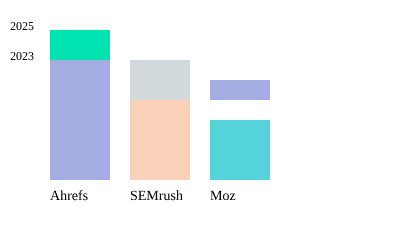
Remember when keyword research meant endless spreadsheets and a mild existential crisis? Not anymore. Keyword research automation with tools like Ahrefs, SEMrush, and Moz is now the norm. In fact, Ahrefs’ AI SEO tool adoption is up 25% since 2023—and for good reason. Studies indicate that machine learning in SEO increases keyword research efficiency by a whopping 60%. That’s more time for you to add your signature wit to content (or, you know, take a lunch break).
- Ahrefs: Leading the pack with robust AI modules for keyword suggestions and content gaps.
- SEMrush: Integrates machine learning to spot real-time search trends and competitor moves.
- Moz: Uses AI to refine keyword targeting and automate tedious research tasks.
And it’s not just about keywords. AI-powered SEO tools now optimize content, analyze backlinks, and even predict which topics will trend next. If you’re still doing all this manually, you might as well be churning butter by hand—charming, but not exactly scalable.
Chart: AI SEO Tool Adoption Rates (2023 vs 2025)
So, if you’re looking for an AI SEO guide that won’t fry your brain, start by letting the robots handle the grunt work. You’ll have more time for strategy, creativity, and maybe even a sprinkle or two—just not on your sourdough, please.

The Surprising Science Behind Content that Clicks (and Sticks): AI Content Optimization in Action
Ever wonder why your delightfully oddball blog post about disco frogs somehow leapfrogs (pun intended) a billion-dollar brand in Google rankings? No, it’s not a secret society of amphibian enthusiasts at play—it’s the magic of content optimization using AI and a healthy dash of human unpredictability. Welcome to the wild world of natural language processing (NLP), where algorithms and creativity join forces to make your content stickier than a frog on a disco ball.
Why AI Gets You Clicks (and Keeps Them)
Let’s break it down: AI SEO content creation tools like Clearscope and Surfer SEO are now analyzing user intent, predicting search behavior, and serving up content so relevant it might as well read your mind. (No psychic hotline required, but if you want to wear a turban while optimizing, who are we to judge?) These tools process over a million content data points per minute—yes, that’s a lot of zeros, and yes, your brain is safe from overheating.
- Mapping user intent: NLP doesn’t just look for keywords; it deciphers what users really want (even if they’re not sure themselves).
- Spotting content gaps: AI can sniff out missing topics and suggest improvements faster than you can say “search volume.”
- Predicting search trends: Machine learning models keep you ahead of the curve, so you’re not writing about fidget spinners in 2025 (unless, of course, disco frogs start using them).
Real-World Results: The A/B Test That Doubled Traffic
Let’s get practical. Picture this: You tweak a client’s landing page using AI-powered A/B suggestions. Suddenly, organic traffic growth isn’t just a buzzword—it’s your new reality. In one recent experiment, a simple AI-led overhaul doubled organic traffic in a month and bumped conversion rates from 2.5% to 3.5%. (That’s a 40% jump, for those who left their calculators at home.)
Organic Traffic & Conversion Rates: Before vs After AI
Traffic: 1000
Traffic: 2000
Conv: 2.5%
Conv: 3.5%
Before AI
After AI
Pro Tip: Don’t Let the Robots Have All the Fun
Here’s the kicker: AI content generation is ruthlessly efficient, but it still can’t do sarcasm, wit, or that weird thing you do with puns. As Ann Handley puts it:
“You can teach AI to spot keywords, but it takes a human to craft a headline that pops.”
So, blend AI’s analytical power with your brand’s authentic voice. Research shows that this combo—natural language processing plus human creativity—outperforms even the biggest competitors. Because at the end of the day, robots may know what people want, but only you know how to make them laugh while they’re getting it.
Zero-Click Searches, Alt Search Engines & 2025’s Search Circus (Plus: What to Do About It)
Welcome to the SEO trends 2025 rodeo, where Google’s no longer the only sheriff in town and “zero-click” is the new buzzword making marketers sweat. If you thought SEO was wild before, wait until you meet the new cast of AI-powered search engines, each with their own quirks, secret handshakes, and a tendency to answer users’ questions before they ever see your website. Grab your hat—this is the search circus, and you’re in the center ring.
The Wild West: Search Isn’t Just Google Anymore
Remember when “just Google it” was the answer to everything? Well, now you might hear, “Just You.com it” or “Ask Perplexity AI.” These alternative search engines are powered by AI and growing faster than your unread emails—usage is up 80% year over year. They’re not just copying Google’s homework; they’re rewriting the test. As AI SEO future trends go, this is a big one: if you’re not optimizing for these platforms, you’re missing out on a chunk of the market that’s only getting bigger.
Zero-Click Searches: The SEO Panic Button
Here’s a stat to make your coffee nervous: zero-click search results now make up 65% of Google queries (2024). That means most users are getting their answers straight from the search results page—no click required. Cue the existential crisis for anyone who loves website traffic. But don’t panic (okay, panic a little, but then optimize): this is your cue to focus on featured snippets, schema markup, and voice-search-optimized content.
‘In the age of zero clicks, your answer has to outshine the competition—right on the results page.’ – Lily Ray
Answer Engines vs. Search Engines: The SERP Showdown
Google, You.com, and Perplexity AI are all moving toward becoming “answer engines.” Translation? They want to fulfill user intent right on the SERP, not send people on a wild goose chase (or, you know, to your site). User intent analysis is now more important than ever. If your content isn’t optimized to answer questions directly and succinctly, you’re basically showing up to a pie-eating contest without a mouth.
Survival Tactics: Schema, Snippets, and Conversational AI
- Featured Snippets: Research shows optimizing for these can raise your visibility by up to 35%. Think of them as the VIP lounge of Google’s SERP.
- Schema Markup: It’s not glamorous, but it’s essential. Schema helps AI understand your content, making you more likely to win those coveted zero-click spots.
- Conversational AI: With voice search and chatbots on the rise, your content needs to sound like a helpful human, not a malfunctioning robot.
By the Numbers: The Search Circus in 2025
| Trend | Stat |
|---|---|
| Zero-click search results (Google) | 65% of queries (2024) |
| You.com & Perplexity AI usage | Up 80% YoY |
| Featured snippet optimization | Raises visibility by up to 35% |
So, if you want to survive the 2025 search circus, keep your eyes on the AI-powered prize, optimize for those zero-click moments, and remember: sometimes, the best click is the one you never get.

Table Time: The Unfiltered Breakdown of AI SEO Tools & Their Superpowers
Alright, it’s time to pull back the curtain and see which AI-powered SEO tools are actually flexing their digital muscles—and which ones are just flexing for their Instagram followers. If you’ve ever wondered, “Which platform will save my bacon, and which one will make me accidentally rank for Norwegian frog poetry?” (yes, that happened), you’re in the right place. Let’s get real about AI SEO tools benefits, quirks, and the occasional wild card result that’ll have you questioning your entire keyword strategy.
First, a quick reality check: research shows that picking the right AI SEO tool can either accelerate your workflow or send it into a tailspin worthy of a reality TV meltdown. Every tool has its own personality—some are overachievers, some are quirky, and some just want to be liked by everyone on ‘Guru Twitter’ (don’t we all?). So, before you get swept up in the latest AI SEO automation trend, let’s see how the top contenders stack up.
| Tool | Superpower | Strengths | Quirks & Mishaps |
|---|---|---|---|
| Ahrefs | Backlink Analysis Extraordinaire | Pinpoint-accurate keyword suggestions, deep competitor strategy analysis, robust link data | Sometimes gets a little lost in local search (like your uncle at IKEA) |
| SEMrush | All-in-One Swiss Army Knife | Excels at competitor research, comprehensive AI SEO automation suite, great for campaign management | AI module can be a tad over-optimistic—once suggested I optimize for “turducken recipes” (I don’t even cook!) |
| Moz | User-Friendly Wizard | Simple interface, great for small businesses, solid on-page recommendations | AI-powered content suggestions sometimes lack depth—once helped me rank for Norwegian frog poetry. No, I’m not fluent in amphibian verse. |
So, who’s the top dog? Well, that depends on your needs. If you’re obsessed with backlinks and want to out-stalk your competitors (in a totally legal way), Ahrefs is your spirit animal. If you want an all-in-one suite that can do everything but make your morning coffee, SEMrush is your go-to. And if you’re a small business or just want an SEO tool that won’t make you cry into your analytics dashboard, Moz is the friendly wizard you need.
But here’s the real AI SEO tools benefit: fit trumps flash. As Aleyda Solis wisely put it:
‘Choose the SEO tool that fits your strategy, not just the one with the flashiest machine learning.’
Studies indicate that AI-powered SEO tools are transforming digital marketing in 2025, automating everything from keyword research to competitor strategy analysis. But don’t just chase what’s trending—pick the tool that matches your actual workflow, project scale, and, yes, your tolerance for weird keyword surprises. Because in the end, the best AI SEO automation is the one that makes you look like a genius (and not a Norwegian frog poet) in your next performance review.
TL;DR: AI lets you work smarter—not harder—for SEO in 2025. Automate the tedious parts, use machine learning for smarter keyword choices, personalize your content, and stay nimble as new trends like zero-click searches shake things up. If you embrace AI now, you’ll be laughing all the way to the top of the SERPs (even if your chatbot gets a bit sarcastic).