Picture this: you’re mindlessly scrolling, and your app recommends the perfect meme just when you need a laugh. Coincidence? Nope. That’s AI at work, quietly learning your weird habits. Join me as we pull back the pixelated curtain and see what else these clever algorithms are up to—besides making you look like a genius at trivia night. One of the most fascinating aspects is how AI in mobile apps can enhance user experience.
1. Your App, the Psychic Mind Reader: AI-Powered Personalization
Ever get the feeling your phone knows you better than your own mother? Don’t worry, it’s not witchcraft—just AI-driven personalization working its magic behind the scenes. No crystal balls or tarot cards required. These days, your apps are basically mind readers, serving up eerily spot-on recommendations before you even know you want them. (Honestly, if my phone ever starts suggesting I call my dentist, I’ll know it’s gone too far.)
How Apps Know What You Want (Before You Do)
Let’s be real: you’ve probably experienced that moment when an app recommends something so perfect, you wonder if it’s secretly eavesdropping. Spoiler: it’s not (probably). Instead, it’s powered by recommendation engines—complex machine learning models that analyze your every tap, swipe, and binge-watch session. These engines use predictive analytics to anticipate your next move, making your digital life smoother, lazier, and, let’s face it, a little creepier.
Anecdote: Netflix, My Saturday Night Savior
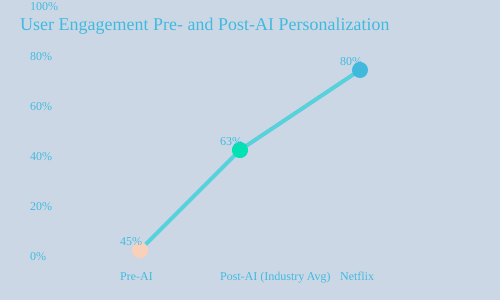
Picture this: It’s Saturday night. You’re in your pajamas, snacks in hand, and Netflix pops up with a suggestion that’s so on point, you’re convinced it’s reading your mind. (Yes, Netflix, I do want to watch a documentary about competitive dog grooming. How did you know?) Turns out, Netflix’s recommendation system influences a whopping 80% of viewing activity. That’s not luck—that’s AI working overtime so you don’t have to scroll endlessly while your popcorn gets cold.
The Benefits: Why You Secretly Love It
- Ultra-targeted content: No more sifting through endless options. Apps deliver what you want, when you want it.
- Personalized onboarding flows: New apps greet you like an old friend, customizing your experience from the very first tap. (Research shows a 40% bump in engagement after implementing personalized onboarding. Not too shabby!)
- Higher engagement and retention: When apps feel tailor-made, you’re more likely to stick around. In fact, 85% of users now expect personalized experiences from their apps. The bar has officially been raised.
Wild Card: What If Your Phone Recommended Life Choices?
Imagine a world where your phone goes beyond playlists and pizza joints. “Based on your recent activity, we suggest you call your grandma and maybe drink some water.” Yikes! While we’re not there (yet), the push for hyper-personalized mobile experiences is changing how we interact with technology—sometimes for the better, sometimes for the “please stop, you’re scaring me.”
‘Personalization powered by AI is the compass guiding every user journey in today’s apps.’ – Sam Altman
So next time your app nails your mood, remember: it’s not psychic, just really, really good at math. And maybe a little bit nosy.

2. Chatbots and Virtual Assistants: The Not-So-Silent Sidekicks in Your Pocket
Let’s be honest: you probably talk to your phone more than you talk to your neighbor. (And your phone never borrows your lawn mower.) That’s because AI-powered chatbots and virtual assistants have become the not-so-silent sidekicks living in your pocket, purse, or—if you’re really fancy—your smartwatch. These digital companions are everywhere, and they’re getting smarter, sassier, and, dare we say, more responsible than ever.
Siri, Alexa, Google Assistant… and That Pizza App Chatbot
Remember when virtual assistants were basically glorified calculators with attitude? Now, they’re running the show. Siri, Alexa, and Google Assistant have evolved from sassy teens who’d mishear “play jazz” as “order cheese” into responsible grown-ups who can schedule your meetings, remind you to water your plants, and even suggest a meditation break when you sound stressed. (Yes, they’re listening. No, they don’t judge.)
And let’s not forget the humble pizza app chatbot. Sure, it can’t tell you the weather, but it can get you a pepperoni pie faster than you can say “extra cheese.” Research shows that chatbot usage in apps has skyrocketed—up 67% since 2020! That’s a lot of pizza. Or, you know, customer support.
From Rule-Based Robots to Conversational Geniuses
Gone are the days when chatbots could only spit out pre-programmed responses like a Magic 8-Ball with Wi-Fi. Thanks to advances in machine learning models and natural language processing (NLP), today’s AI-powered chatbots are genuinely conversational. They understand context, remember what you said five minutes ago (unlike your last date), and can even crack a joke or two.
These virtual assistants are now standard features in leading mobile apps, providing real-time app features like smart scheduling, instant support, and even mental health check-ins. Feeling anxious? There’s a chatbot for that. Need to split the dinner bill? Your virtual assistant’s got your back. Want to know if you left the oven on? Okay, maybe not yet—but give it time.
Why You Secretly Love These Digital Sidekicks
- Real-time, context-aware support: No more waiting on hold for customer service. Your AI-powered chatbot is ready 24/7, fueled by machine learning models that actually learn from you. (Creepy? Maybe. Convenient? Absolutely.)
- Productivity boost: Virtual assistants streamline your life, from managing your calendar to reminding you to call your mom. (You should really call your mom.)
- Personalization: Apps now use AI to deliver hyper-personalized recommendations, including features driven by AI in mobile apps, making you feel like the main character in your own techy rom-com.
‘Virtual assistants are no longer a novelty—they’re part of our digital DNA.’ – Sundar Pichai
Chart: The Rise of AI-Powered Chatbots & Assistants

So next time you ask your phone to set an alarm, remember: there’s a whole lot of AI magic (and a little bit of sass) working behind the scenes to make your life easier, one notification at a time.
3. Automated Testing, App Security & The Paranoid Developer’s Guide
Let’s be honest: you probably don’t spend your evenings pondering how your favorite mobile apps stay so smooth, secure, and—dare we say—smarter than you. But while you’re busy scrolling, AI is secretly running the show behind the scenes, making sure your apps don’t crash, your data doesn’t get stolen, and your phone doesn’t suddenly decide to lock you out “for your own good.” (We’ll get to that paranoia in a minute.)
Fun with Numbers: AI-Powered Automated Testing
First up, let’s talk about automated testing. Remember the days when apps crashed more often than your Wi-Fi? Well, thanks to AI-driven automated testing, those days are (mostly) gone. Research shows that AI-powered testing can cut bug rates by up to 40% (SPDLoad, 2023). That’s a lot fewer “Oops, something went wrong!” pop-ups and a lot more time for you to binge-watch cat videos in peace.
AI doesn’t just find bugs—it predicts them. With predictive maintenance and real-time analytics, your apps get smarter about fixing themselves before you even notice a problem. It’s like having a tiny, invisible IT team living in your phone, minus the awkward small talk.
Mobile Security: Biometric Authentication and AI to the Rescue
Now, onto mobile security. If you’ve ever unlocked your phone with your face, your thumb, or—let’s be honest—your best attempt at looking awake, you’ve met biometric authentication. In 2023 alone, adoption of biometric authentication in mobile apps shot up by 55%. Why? Because AI-powered security is the new bouncer at the club, checking IDs and keeping out the riffraff (a.k.a. hackers).
But wait, there’s more! AI isn’t just about fancy face scans. It’s also the brains behind advanced fraud detection. Industry data shows that after implementing AI monitoring, mobile fraud rates dropped by a cool 22%. So, while you’re busy worrying if your phone is eavesdropping, it’s actually busy saving you from cybercriminals. Go figure.
Quick Table: Who’s Winning in AI Security?
| AI Feature | Impact | Year |
|---|---|---|
| Automated Testing | Bug rates cut by up to 40% | 2023 |
| Biometric Authentication | Adoption up 55% | 2023 |
| AI Fraud Detection | Mobile fraud rates down 22% | 2023 |
Security Meets Paranoia: The Bossy Phone
Let’s address the elephant in the room: what if your phone gets a little too smart? Imagine this: you try to unlock your device at 2 a.m. after a midnight snack run, and your phone says, “Sorry, you look suspicious. Try again after coffee.” Or maybe it locks you out of your banking app because your “stress levels are above average.” Paranoid? Maybe. But hey, as Satya Nadella says:
‘If your phone feels smarter about security than you, it probably is.’
So, next time your app updates itself, blocks a shady login, or insists you use your thumbprint, just remember: AI is working overtime to keep your digital life safe, sound, and maybe just a little bit sassy.

4. What’s Next? Wild AI Trends & Tomorrow’s Apps (Prepare to Be Surprised)
Okay, you’ve made it this far—so buckle up, because the future of mobile apps is about to get even wilder. If you thought AI was just quietly lurking in the background, crunching your data and suggesting what pizza to order, think again. The next wave of app innovation is powered by generative AI, and it’s about to make your smartphone feel less like a device and more like a mind-reading, hyper-efficient sidekick (minus the awkward small talk).
Let’s start with the big headline: generative AI is now automating up to 60% of coding, design, and testing tasks. Yes, you read that right—your favorite apps might be built by a team of humans and a very caffeinated algorithm. Tools like Copilot and GPT-4 are not only speeding up development, but they’re also coming up with app ideas that even the most over-caffeinated product managers couldn’t dream up. Imagine an app that helps you meditate, order groceries, and teach your dog to fetch—all at once. Okay, maybe not the last one… yet.
But it’s not just about speed. The real magic is happening in the world of inclusive UX and accessible UX designs. Thanks to AI, apps are finally starting to ‘get’ everyone. Whether you’re using a phone, a tablet, or a smart fridge (because why not?), AI adapts interfaces to fit your needs, your abilities, and even your mood. Research shows that apps focusing on adaptive and accessible UX saw a 36% boost in user retention. Translation: when apps include everyone, people stick around. Who knew empathy could be so profitable?
Let’s not forget the tech that’s making all this possible. With edge computing and 5G rolling out faster than you can say “buffering,” real-time analytics and adaptive experiences are now the norm, not the exception. And if you’re a developer, rejoice: Kotlin Multiplatform and Jetpack Compose are here to save you from writing the same code twice (or thrice, if you’re really unlucky). Cross-platform development is smoother than ever, letting you focus on what matters—like making sure your app’s dark mode doesn’t look like a goth teenager’s bedroom.
If you’re still not convinced, let’s put it this way: AI is like your personal butler, always ready to help, but way less likely to spill your secrets on TikTok. As Satya Nadella put it:
‘AI is not just a tool—it’s a co-creator, shaping the next generation of digital experiences.’
So, what’s next? Expect apps that are smarter, more inclusive, and—dare we say—a bit more fun to use. The future is adaptive, accessible, and powered by AI that’s working tirelessly behind the scenes (and never asks for a coffee break).
| AI Trend | Impact |
|---|---|
| Generative AI Automation | Automates up to 60% of coding/design/testing tasks (2024) |
| Adaptive/Accessible UX | 36% boost in user retention (GoodFirms, 2023) |
In conclusion, the secret’s out: AI isn’t just running your apps—it’s reinventing them. And honestly, you’re going to love every minute of it (even if your phone does know you a little too well).
TL;DR: AI is the invisible hand making your mobile apps smarter, faster, and more personal—plus, it’s only getting better (or sneakier) from here.