
Picture this: you, sipping coffee in pajama pants while your AI assistant schedules back-to-back Zoom calls (but mercifully leaves you time for a snack break). Back in 2019, I thought remote work was just for digital nomads and rogue software developers with questionable WiFi. Fast forward, and I’m attending ‘virtual happy hours’ and letting an algorithm decide if my 2 PM mood is ‘meeting-appropriate.’ Today, let’s dive into how AI is not only changing remote work, but making it feel like the future snuck up on us while we were still trying to find the mute button.
From Pajamas to Productivity: Remote Work Trends (and Perks)
Let’s be honest: you probably didn’t imagine “work from home” would mean answering emails in pajamas, with a cat on your keyboard and a suspiciously large mug of coffee. But here we are, living in the golden age of remote work trends—where the hybrid work model is the new status quo, and your kitchen counter is just as important as the office desk (if not more, especially when snacks are involved).
Hybrid Work Model: The New Normal (and Your Couch Approves)
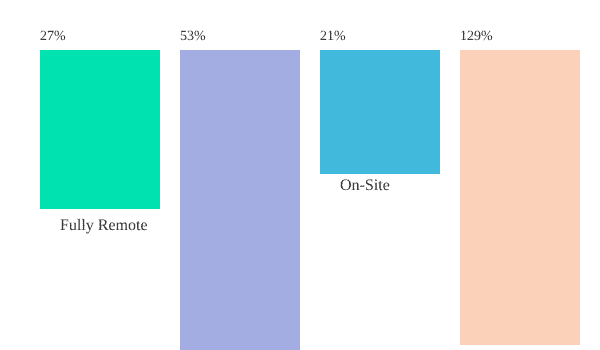
Gone are the days when “remote jobs” were code for “customer service at 2 a.m.” Now, research shows that hybrid work models are the real MVP, blending in-office collaboration with the sweet, sweet freedom of working from home. According to recent remote work statistics, a whopping 53% of remote-capable workers now have a hybrid schedule. That’s right—more than half of us are mixing Zoom calls with laundry cycles, and honestly, productivity has never looked so cozy.
- 27% of workers are fully remote (no pants required, ever).
- 53% are hybrid (pants optional, depending on the day).
- 21% are still on-site (pants mandatory, sorry).
And if you’re wondering if this is just a pandemic blip—think again. By 2025, it’s projected that 22% of the U.S. workforce (that’s about 32.6–36.2 million people) will be working remotely. That’s a lot of home-brewed coffee and, let’s face it, probably a few more “you’re on mute” moments.
Remote Work Statistics: More Jobs, More Perks, More Pajamas
If you’re job hunting, you’ve probably noticed that remote jobs now make up 15% of all opportunities in the U.S.—that’s three times more than in 2020. The remote work trends are clear: companies are embracing the flexibility, and employees are loving the commute (or lack thereof).
But wait, there’s more! Organizations are saving an average of $11,315 per part-time remote employee every year. That’s enough to buy a suspiciously fancy espresso machine or, you know, just keep the lights on in your home office. Employers are finally realizing that less office space means more savings—and fewer awkward elevator rides.
| Work Arrangement | Percentage of Workers |
|---|---|
| Fully Remote | 27% |
| Hybrid | 53% |
| On-Site | 21% |
| Annual Employer Savings (per part-time remote worker) | $11,315 |
| Remote Jobs Share (2023) | 15% (triple since 2020) |
| Projected Remote Workforce (2025) | 22% (~32.6–36.2 million) |
| Gen Z (18-24) vs 65+ AI Job Anxiety | 129% higher for Gen Z |
Generational Drama: Gen Z vs. Boomers (and AI Anxiety)
Now, let’s talk about the elephant in the Zoom room: AI. Turns out, not everyone is equally chill about robots joining the workforce. If you’re Gen Z (18-24), you’re 129% more likely to worry about AI replacing your remote job than your boomer colleagues. Maybe it’s because you’ve seen one too many sci-fi movies, or maybe it’s just that AI can’t appreciate your TikTok references. Either way, the generational divide is real—and so is the existential dread.
AI is not just a tool—it’s a game-changer for where and how work happens. – Satya Nadella
Virtual Teams: Real Results (Pants Optional)
Let’s not forget the best part: virtual teams are thriving. Sure, you might not know if your coworker is wearing pants, but you do know that collaboration is up, productivity is soaring, and nobody misses the office fridge thief. With AI-powered tools making remote collaboration smoother than ever, it’s clear that work from home isn’t just a trend—it’s a revolution (with better snacks).
So, whether you’re team pajamas or team business-casual-from-the-waist-up, one thing’s for sure: remote work is here to stay, and it’s only getting weirder (and more awesome) with AI in the mix.

AI Tools: The Secret Weapon (That Sometimes Schedules Your Meetings at 3 AM)
Let’s face it: remote work is a wild ride. One minute you’re in your pajamas, the next you’re in a virtual meeting with someone who thinks “business casual” means “camera off.” But here’s the real plot twist—AI tools have quietly become the secret weapon of remote work. And yes, sometimes they schedule your meetings at 3 AM. (Because apparently, robots don’t need sleep. Or, you know, basic empathy.)
When Your Calendar Gets a Mind of Its Own
If you’ve ever woken up to a calendar invite for a “quick sync” at the crack of dawn, you’ve met the magic (and mischief) of AI-powered collaboration tools. These digital assistants are supposed to make life easier by automating scheduling, transcription, and reporting. In theory, they’re the ultimate productivity boosters. In practice, they sometimes think you live in a different time zone—or on a different planet.
- Automated scheduling: Book meetings with a click. Or, you know, accidentally at 3 AM.
- Real-time transcription: Never miss a word, even if you’re still half asleep.
- Automated reporting: Get meeting summaries without bribing your coworkers with coffee.
Remember the good old days when you had to actually ask a human to take notes? Wild times. Now, AI tools like Otter.ai, Fireflies, and Notion are quietly listening in, jotting down every “synergy” and “let’s circle back.”
Automation: Quietly Running the Show (But in Slow Motion)
Here’s the thing: automation in remote work isn’t just a trend—it’s a marathon. Research shows that automation is set to take over half of current global tasks, but don’t expect your robot overlords to finish the job overnight. Experts say it could take up to 20 years for automation to really hit its stride. (Apparently, even robots need to take a coffee break. Who knew?)
In the meantime, AI-powered collaboration tools are already transforming daily workflows. They’re the unsung heroes behind your seamless video calls, instant document sharing, and those magical moments when someone actually remembers to send the meeting notes.
Market Growth: Pass the Virtual Confetti!
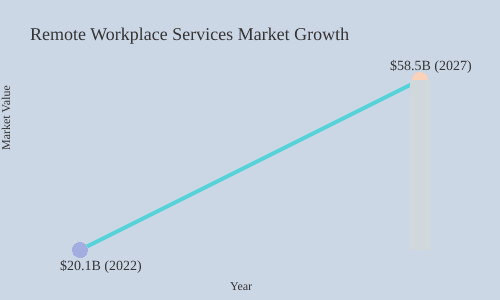
If you think AI in remote work is just a passing fad, think again. The remote workplace services market is booming—and not just because everyone wants to work from their couch. In 2022, the market was worth a whopping $20.1 billion. By 2027? Try $58.5 billion. That’s a lot of virtual confetti (and probably a few more 3 AM meetings).
Spotlight: Real-World AI Tools Making Remote Work Less of a Hot Mess
Let’s shine a light on the real MVPs of remote work technology. These AI-powered collaboration tools are quietly (and sometimes loudly) making your workday less chaotic:
- Otter.ai: Real-time transcription so you can finally stop pretending to take notes.
- Clockwise: Intelligent scheduling that tries (keyword: tries) to avoid double-booking your lunch break.
- Notion AI: Automated reporting and meeting summaries—no more “Who was supposed to write that up?”
Studies indicate that these tools are directly impacting productivity with AI, streamlining collaboration, and making remote work a little less weird. (Okay, maybe just a little.)
Tiny Tangent: Remember Human Note-Takers?
Let’s take a moment to appreciate how far we’ve come. There was a time when you had to ask a real person to scribble down meeting notes. Now, AI tools are doing the heavy lifting—no more awkward “Who’s got the minutes?” moments. Progress, right?
Automation will change the way we work, not just where we work. – Sundar Pichai
So, next time your calendar pings you at 3 AM, just remember: it’s all part of the AI-powered journey. And hey, at least you don’t have to take notes.

Will AI Steal Your Remote Job, or Just Your Free Time? The Real Stats
Let’s be honest: if you’re working remotely, you’ve probably already had that moment where you wondered if your new “colleague” named AI Assistant is just a little too good at their job. Maybe you’ve even caught yourself nervously side-eyeing your own Slack messages, thinking, “Is this how it starts?” Welcome to the age of AI replacing jobs, where the biggest job market disruption might just be your own existential crisis.
But before you start panic-ordering business cards for your future bakery (hey, sourdough is always in demand), let’s look at the real numbers. Research shows that a substantial portion of jobs face AI-related disruption. In fact, studies indicate that 47% of U.S. jobs could be disrupted by AI in the next decade. That’s almost half the workforce—so if you’re feeling nervous, you’re definitely not alone. And globally? We’re talking about 300 million jobs at risk. That’s enough people to fill every stadium in the world and still have a line out the door.
But here’s the plot twist: only 14% of all workers are expected to actually change careers by 2030. So, while the robots are coming for our tasks, most of us are apparently planning to just… stick around and see what happens. Maybe we’re all just hoping the AI will get bored and start outsourcing their own work to other AIs. (Honestly, if my robot vacuum could hire another robot to clean under the couch, I’d be impressed.)
Now, if you’re a remote worker, you might be feeling the heat a little more than your in-office pals. Studies show that remote workers are 42% more likely to worry about AI-driven job loss compared to those who still brave the office coffee machine. Maybe it’s because you’re already used to collaborating with digital tools, or maybe it’s because your cat is a terrible conversationalist. Either way, the anxiety is real. And let’s face it, when your “office” is your kitchen table, the idea of being replaced by a chatbot feels a little too close to home.
But here’s where things get weirdly awesome. Remote jobs are booming, and remote work trends show no signs of slowing down. By 2025, up to 36 million Americans could be working remotely. Hybrid work models are now the norm, blending office life with the freedom to wear pajama pants on Zoom calls. And AI isn’t just lurking in the background, plotting to take your job—it’s also making your work life easier. Automation of tasks means less time spent on boring stuff like scheduling and more time for, well, anything else. AI-powered tools are handling everything from real-time transcription to intelligent scheduling assistants, so you can focus on the big ideas (or perfecting your banana bread recipe).
Still, it’s smart to keep an eye on the shifting sands of the job market. The risks are real, but so are the opportunities. As Ginni Rometty wisely said:
The key to thriving with AI is adaptability, not fear.
So, should you be worried? Maybe a little. Should you start prepping your “AI-proof” resume? Sure, if it makes you feel better. But don’t forget: the future of work isn’t just about surviving the robot uprising—it’s about learning to work alongside the bots, leveraging their strengths, and maybe even teaching them how to make a decent cup of coffee.
To help you mentally prepare (or just give you something to show your boss at your next performance review), here’s a handy table mapping out the (very real) risks and shifts in the job market:
| Stat | What It Means |
|---|---|
| 47% of U.S. jobs at risk of AI disruption in 10 years | Time to brush up on your “working with robots” skills |
| 300 million global jobs at risk | That’s a lot of potential new bakers, artists, and dog walkers |
| 14% of all workers expected to change careers by 2030 | Most of us are sticking around, just with new AI-powered tools |
| Remote workers: 42% more likely to worry about AI-driven job loss | Maybe time to swap “AI anxiety” for “AI ally” on your LinkedIn profile |
In the end, AI replacing jobs is a real trend, but so is the rise of new opportunities. The robots may not take lunch breaks, but they also don’t get to enjoy leftover pizza. So, keep calm, stay adaptable, and remember: the future of remote work is weird, wonderful, and—if you play your cards right—still very much human.
TL;DR: AI isn’t here to take your remote job (yet)—but it sure might make your workday easier, smarter, and slightly weirder. Don’t skip the snack breaks!