Picture this: You’re hunched over your laptop at midnight, coffee in one hand, a burning desire to conquer Google in the other. Yet, your site still lurks on page two! In my early blogging days, I peppered my posts with keywords like a chef gone mad—think ‘Best Pancake Recipe’ every sentence. Result? Zero readers, other than my grandma (thanks, Nana). It’s time to fess up: we’ve all committed some SEO atrocities. Let me walk you through mine—and, more importantly, how you can outsmart yours before you wind up as invisible as my first viral fail.
Tangled in the Keyword Web: Stuffing, Skipping, and Robot Talk
Keyword Stuffing: When “Epic Pancakes” Turns into a Recipe for Disaster
Let’s be honest—you want your “epic pancakes” to be the talk of the town (and Google). But if you repeat “epic pancakes” 37 times in one post, you’re not just making your readers hungry; you’re making Google’s algorithm choke. Keyword stuffing is one of the most common SEO mistakes content creators make. It’s like adding salt to your pancakes instead of syrup—nobody’s coming back for seconds.
- Why it fails: Google’s bots are smarter than your average breakfast chef. If you use a keyword 6-15 times in a single post, you’re waving a big spammy flag. This leads to search penalties and a poor user experience (UX).
- What happens: Your site drops in rankings, and users bounce faster than a pancake off a hot griddle.
Instead, sprinkle your keywords naturally—like chocolate chips, not like a flour explosion.
Skipping Search Intent: When Your Recipe Misses the Plate
Imagine someone searches “epic pancakes recipe” and lands on your post about “pancake stacking competitions.” Oops. That’s skipping intent and jumping to keywords—another classic SEO slip-up. Ignoring search intent means you’re serving the wrong dish to your guests.
- Why it fails: Content that doesn’t match what users want leads to irrelevance. The average bounce rate for intent-mismatched content is a whopping 70%.
- What happens: Readers leave faster than you can say “flapjack,” and Google takes note.
Always ask: What is my reader really looking for? If it’s a recipe, don’t give them the history of competitive pancake flipping.
Writing for Robots, Not People: The Dystopian Toaster Chef
Ever read a post that sounds like it was written by a kitchen appliance? “Epic pancakes are epic. Pancakes are epic. Epic pancakes recipe.” That’s writing for robots not people, and it’s a fast track to losing your audience. Content written primarily for algorithms sees 35% lower engagement.
- Why it fails: Readers crave personality, not robotic repetition. When you sound like a dystopian toaster, nobody sticks around for breakfast.
- What happens: Engagement plummets, and your rankings follow. As Rand Fishkin wisely said:
“Content that ignores the reader is content that goes unread.” – Rand Fishkin
Write like a friendly chef, not a malfunctioning blender. Add flavor, humor, and a dash of humanity.
Bounce Rates: The Proof Is in the Pancakes
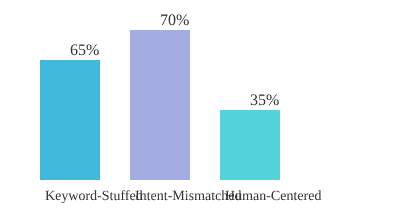
Bar chart: Bounce rates soar for keyword-stuffed and intent-mismatched content, but drop when you write for humans.

Duplicate Déjà Vu: You, Your Twin, & the Content Copycat Crisis
Ever feel like you’re seeing double on your website? No, you haven’t entered the Matrix—welcome to the wild world of duplicate content. Whether you’re accidentally repeating yourself, copying your own posts, or channeling your inner copycat from someone else’s blog, Google’s algorithm is watching. And trust us, it’s more suspicious than your mom when you say, “I finished my homework.”
Why ‘Unique’ Isn’t Just a Buzzword
Let’s get real: unique content isn’t just a fancy marketing term. It’s the difference between ranking high and sinking faster than a pancake with too much syrup. When your site is stuffed with duplicate paragraphs, Google gets confused. Instead of boosting your visibility, it starts playing a game of “Which page should I rank?” Spoiler: often, it’s none of them.
- Fact: Sites with over 20% duplicate content can lose up to 50% of their expected search visibility. That’s like inviting half your guests to a party and then locking the door.
- Common SEO Mistake: Copy-pasting product descriptions, reusing blog intros, or letting your CMS spit out identical category pages.
How to Fix Duplicate Content (and Get Back in Google’s Good Books)
-
Canonical Tags: These are like telling Google, “Hey, THIS is the original!” Slap a
<link rel="canonical" href="URL">tag on your preferred page, and watch up to 80% of lost SEO traffic come back home. -
Careful Rewrites: Don’t just shuffle a few words. Rewrite duplicate sections with fresh insights, new examples, and your own voice. Remember, search engines crave original thought, not echoes of the same idea.
“Search engines crave original thought, not echoes of the same idea.”
— Aleyda Solis - Regular Content Audits: Even the best of us get a little lazy. Schedule quarterly audits to sniff out accidental clones. Tools like Screaming Frog or Siteliner can help you spot those sneaky duplicates hiding in your archive.
But Wait, How Much of My Blog Is a Copycat?
On average, 4-8% of most blog archives contain unintentional duplicate material. That’s like finding out your twin has been attending your Zoom meetings. Yikes!
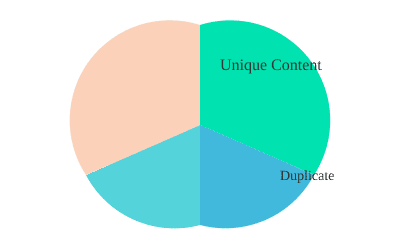
Pro tip: Don’t let your site become a hall of SEO mirrors. Regularly check for duplicate content, fix it fast, and keep your rankings as fresh as your best ideas.

Speed Bumps on the SEO Highway: Site Slowness & Mobile Mishaps
Ever watched a user bounce off your slow website faster than a pancake off a greased griddle? Welcome to the world of Poor Site Speed Optimization—where your content creation dreams go to die (or at least take a nap). If your site takes longer to load than it does to make a cup of instant noodles, you’re not just losing visitors; you’re losing rankings, conversions, and probably your sanity.
Slow Sites: The Silent Conversion Killers
Let’s face it: nobody likes to wait. According to the data, a 1-second delay in load time can drop conversions by 7%. That’s right—every extra second is like a little SEO grim reaper, scything away your hard-earned traffic. Google’s John Mueller put it best:
‘Fast and functional beats fancy every time.’ – John Mueller
So, before you add that 12MB hero image of a cat riding a unicorn, remember: site speed optimization is your best friend. Here are some quick fixes:
- Compress images: Shrink those files! A simple compression can improve speed by up to 25%.
- Minify code: Less is more. Clean up bloated HTML, CSS, and JavaScript.
- Choose fast hosting: Your bargain-bin server might be costing you more than you think.
Mobile Mishaps: Pancake Disasters on Tiny Screens
Picture this: you’ve crafted a desktop masterpiece, but on mobile, it looks like a pancake disaster—buttons overlapping, text squished, and images doing the limbo. With over 60% of web traffic coming from mobile devices, mobile optimization isn’t just a nice-to-have; it’s survival.
Yet, only 30% of sites are truly optimized for mobile. That means 70% are serving up a hot mess to the majority of their visitors. Don’t be that guy. Here’s how to avoid mobile mishaps:
- Responsive design: Make sure your site looks good on all screens, from desktops to phones the size of a Pop-Tart.
- Fix tap targets: Buttons should be big enough for human fingers, not just fairy dust.
- Test, test, test: Use Google’s Mobile-Friendly Test tool to spot issues before your users do.
SEO Slip-Ups by the Numbers
| SEO Factor | Impact |
|---|---|
| 1-second load delay | -7% conversions |
| Mobile traffic | 60%+ of total visits |
| Sites truly mobile-optimized | Only 30% |
| Image compression | Up to 25% speed boost |
Remember, user experience is the secret sauce behind every successful SEO strategy. Don’t let slow speeds or mobile mishaps turn your site into a digital ghost town. Tackle these tiny fixes, and watch your rankings—and your sanity—soar.

The ‘Just One More Link’ Game: Internal Linking & Local SEO Oversights
Let’s face it: when it comes to internal linking practices, most of us have played the “Just One More Link” game. You know, that moment when you’re halfway through a blog post and suddenly think, “Wouldn’t it be brilliant if I linked to my homepage here? And here. And… oh, why not here too?” Before you know it, you’ve got ten links to your homepage in a single post. Congratulations—you’ve officially confused both your readers and Google’s bots. As Marie Haynes wisely said,
‘A well-placed link is worth a dozen thrown at random.’
Here’s the thing: good internal linking guides users and spreads ranking power across your site. Bad internal linking (or, as we like to call it, “link spaghetti”) just leaves everyone tangled up. Overlinking or mislinking creates dead ends, frustrates search engines, and can tank your engagement. In fact, 60% of small sites lack structured internal linking, and see 40% less engagement. That’s a lot of missed clicks and confused crawlers.
| SEO Tactic | Common Oversight | Impact |
|---|---|---|
| Internal Linking | Random, excessive, or irrelevant links | 40% less engagement |
| Local SEO | Ignoring local listings | Up to 20% lower search position |
But wait, there’s more! Let’s talk about local SEO neglect. If you’re ignoring local SEO, you’re basically waving goodbye to all those hungry folks searching “pancakes near me” while you’re flipping flapjacks in your kitchen. Whether you’re a brick-and-mortar bakery or a food blogger running your empire from your apartment, claiming your Google My Business listing is a must. Data shows that claiming local listings improves search position by up to 20% in relevant searches. That’s not just syrup on the pancakes—that’s the whole breakfast buffet.
Here’s the tactical fix: Use logical, relevant links that help readers find related content (not just your homepage on repeat). Think of your site as a friendly tour guide, not a labyrinth. And don’t forget to optimize for local SEO—even if your “business” is a one-person show. Claim your local listings, add your address (even if it’s just your city), and sprinkle in those location keywords. Your future fans (and Google) will thank you.
In conclusion, internal linking and local SEO are often overlooked, but they’re two of the most powerful tools in your SEO toolbox. Avoid the chaos of bad internal linking and the invisibility cloak of local SEO neglect. Remember, a little structure and a dash of local flavor can transform your site from lost in the crowd to leading the pack. Outsmart those SEO slip-ups, and you’ll be the one serving up search results—no extra links required.
TL;DR: Avoiding classic SEO mistakes is your ticket to search engine glory. Ditch keyword stuffing, focus on humans, and laugh your way toward page-one success!