
Last year, I nearly bought a chatbot that thought my garden gnome was a customer. True story. Turns out, to choose the right chatbot for your business is trickier than ordering a coffee with oat milk. In this post, we’ll slice through the buzzwords, drop the jargon, and help you find an AI sidekick that fits like your favorite hoodie—no buyers remorse, no talking statues. Ready to future-proof your customer service? Buckle up!
Define Your Objectives: Because ‘Just Because’ Isn’t a Strategy
Let’s face it: picking a chatbot for your business without a plan is like shopping for shoes blindfolded. Sure, you might get lucky and find something that fits, but odds are you’ll end up limping. So, before you get dazzled by fancy AI jargon or a chatbot that promises to “revolutionize customer engagement” (and maybe make your coffee), let’s talk about the first—and most important—step: define your objectives.
Pinpoint What You Want (No, “World Domination” Doesn’t Count… Yet)
Do you want a chatbot to handle customer service so your team can finally take a lunch break? Or maybe you’re after lead generation—because who doesn’t love a steady stream of potential customers? Perhaps you need an internal helpdesk, or just want a digital mascot to greet website visitors with a virtual high-five. The point is, your business goals should guide your chatbot quest.
- Customer support: Answer FAQs, solve problems, and keep customers smiling (or at least not frowning).
- Lead generation: Capture leads faster than you can say “conversion funnel.”
- Internal helpdesk: Make HR’s life easier (and maybe yours, too).
- Marketing automation: Because sending emails manually is so 2010.
List Your Business Challenges (Yes, Even the Embarrassing Ones)
Every business has its pain points. Maybe your support team is drowning in repetitive questions. Maybe leads are slipping through the cracks like socks behind a dryer. Research shows that 73% of customers prefer fast support interactions (thanks, Salesforce), so if speed is your Achilles’ heel, a chatbot could be your new best friend. Write down your biggest headaches—then ask yourself, “Can a bot fix this, or do I just need more coffee?”
Visualize the Ideal Customer Interaction (And Your Weakest Link)
Close your eyes. Picture your customer’s dream interaction with your business. Is it instant answers at 2 a.m.? A friendly nudge to finish their purchase? Now, picture where things usually go off the rails. That’s your weak spot. If you can see a chatbot swooping in like a digital superhero, you’re on the right track.
‘Start with your goals, or you’ll end up with a glorified answering machine.’ – Suzie Zhao, AI Solutions Architect
Objectives Shape Chatbot Types (No One-Size-Fits-All Here)
Once you’ve nailed down your objectives, you can match them to chatbot types: AI-powered for complex conversations, rule-based for predictable tasks, or hybrid for when you want the best of both worlds. Your goals will also help you decide which features matter most—like integration with your CRM, multi-channel support, or analytics to track your chatbot’s dazzling performance.
| Objective | Why It Matters |
|---|---|
| Customer Support | 73% of customers prefer fast support (Salesforce) |
| Lead Generation | Capture and qualify leads automatically |
| FAQs | Reduce repetitive queries for your team |
| Internal Helpdesk | Streamline employee support |
| Marketing Automation | Boost engagement with timely messages |
Remember, defining your objectives isn’t just a box to check—it’s the secret sauce that makes your chatbot more than a glorified answering machine. So grab a pen, jot down your business goals, and get ready to pick the perfect AI sidekick for your biz.

Chatbot Features Smackdown: Do You Need a Swiss Army Knife or a Toothpick?
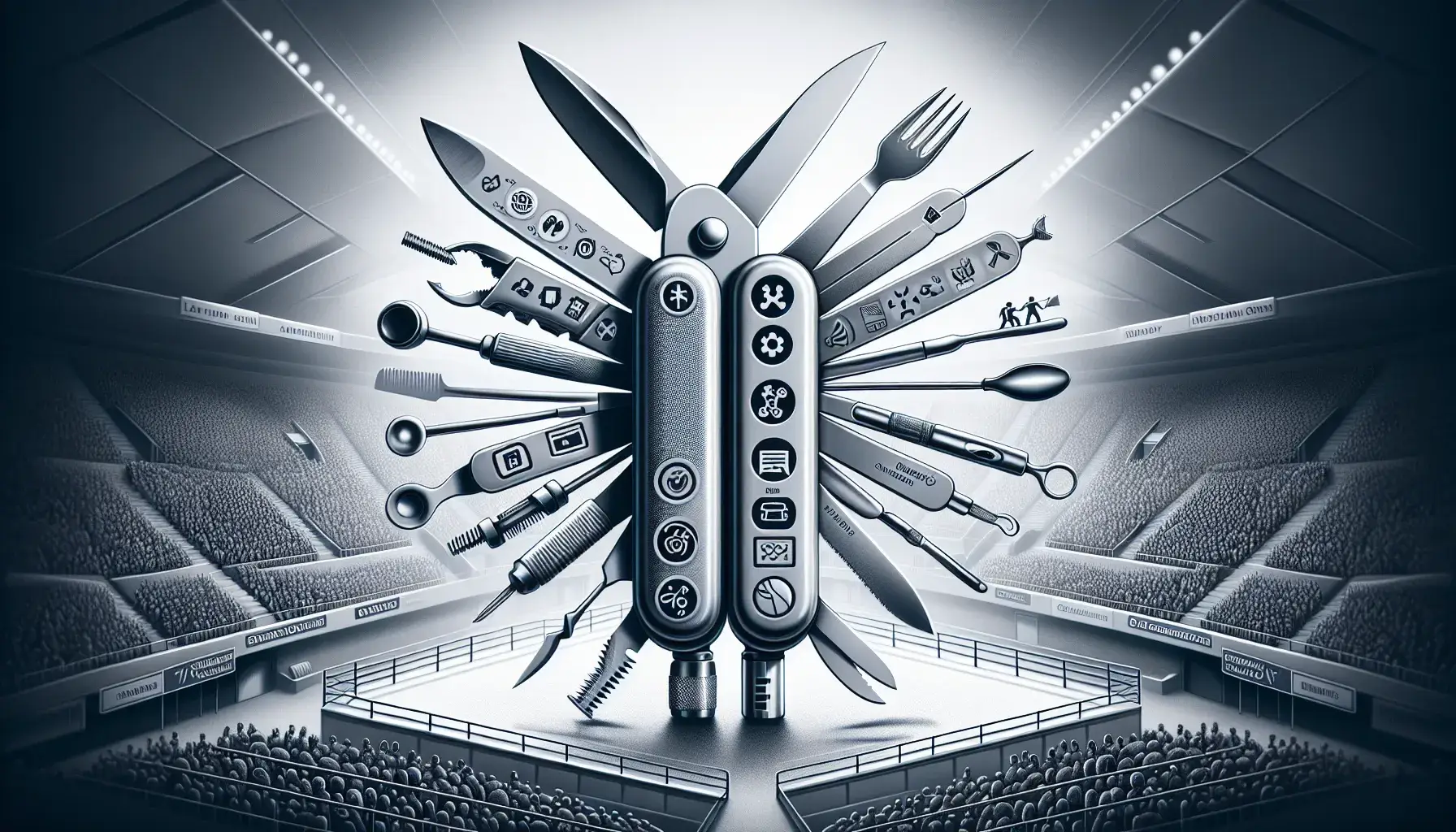
Let’s face it: picking chatbot features can feel like shopping for kitchen gadgets. Do you need the all-in-one, 37-blade Swiss Army Knife of chatbots, or will a trusty toothpick do the trick? Before you go full “kid in a candy store” with flashy features, let’s break down what really matters for your business.
Essential Features vs. Bling: What’s Actually Useful?
Sure, some chatbots promise the moon—Natural Language Understanding (NLU), advanced analytics, integrations with everything short of your toaster. But research shows that functionality and chatbot customization are the real MVPs when it comes to chatbot selection criteria.
- NLU & AI capabilities: Great for handling complex customer questions, not just “What’s your return policy?”
- Analytics: Because who doesn’t want to know if their bot is actually working?
- Integrations: Connect to your CRM, email, or even Slack. (Sorry, still no fridge integration.)
But beware: “bling” features are fun until you realize you’re paying for a chatbot that can order pizza but can’t answer basic FAQs.
Customization: Make It Sound Like YOU (Not a Robot Overlord)
Chatbot customization is where the magic happens. Can you tweak the tone of voice so your bot sounds like your brand, not a robot from 1997? Can you add custom workflows, or is it stuck saying “I’m sorry, Dave, I can’t do that”?
- Tone of Voice: Friendly? Formal? Dad jokes on Fridays?
- Integration Depth: Deep links with your business tools = less manual work for you.
- Branding Elements: Logo, colors, and maybe a snazzy hat (okay, maybe not the hat).
As one wise Customer Success Lead put it:
“A feature-packed bot is useless if your team can’t actually use it.” – Carlos Rivera
AI, Rule-Based, or Hybrid? The Showdown
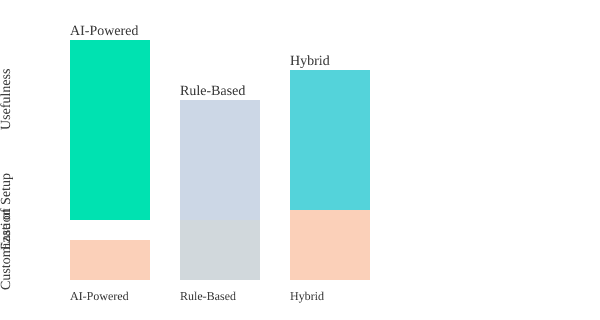
Time for the main event: AI-powered vs. rule-based vs. hybrid chatbots. Studies indicate that AI-powered bots excel at complex queries, while rule-based bots handle about 70% of repetitive tasks but get flustered by anything more nuanced than “yes” or “no.” Hybrid bots? They’re the multitaskers—good at both, but not always perfect.
Multi-Channel Support: Be Everywhere (Without Actually Being Everywhere)
Your customers are everywhere—website, social media, email, maybe even carrier pigeon. Multi-channel support ensures your chatbot can keep up, so you don’t have to clone yourself.
Trial Periods & Vendor Support: Don’t Skip the Test Drive
Trial periods (usually 7–30 days) are your golden ticket. Don’t skip them! And ask about vendor support—because when your chatbot decides to speak only in emojis, you’ll want backup. Research shows trial periods and vendor support can save you from onboarding nightmares.
So, Swiss Army Knife or toothpick? Choose wisely, and may your chatbot never say, “I’m sorry, I didn’t catch that,” ever again.
Integration Showdown: Will Your Shiny New Bot Play Nice with Others?
So, you’ve found the chatbot of your dreams. It’s shiny, it’s smart, and it promises to handle customer questions faster than you can say “multi-channel support.” But before you get too attached, there’s a crucial question you need to ask: Will this chatbot actually play nice with the rest of your business systems? Or will it throw a digital tantrum and lock itself in a silo, refusing to talk to your CRM, email, or marketing tools? (Spoiler: That’s not the kind of drama you want.)
Will Your CRM and Chatbot Be BFFs or Frenemies?
Let’s get real. Integration with systems like your CRM and marketing platforms isn’t just a “nice-to-have”—it’s the secret sauce for seamless operations and maximizing ROI. Research shows that 60% of businesses say integration is the hardest part of chatbot adoption (thanks, Mindster, for confirming our suspicions). And it’s no wonder: if your chatbot can’t talk to your CRM, you’ll end up with confused customers, lost data, and possibly a chatbot that thinks your grandma is a VIP client. (Sorry, Grandma.)
Vendor Promises vs. Reality: The Wild Card Test
Vendors love to say their chatbot platforms offer “easy integration.” But let’s be honest—sometimes “easy” means “easy for a team of developers with three PhDs and a lot of coffee.” Before you sign anything, test those integrations. Imagine your bot sending invoices to your grandma, or worse, emailing your entire contact list about your new cat. (It happens. We’ve seen things.) Ask those pesky technical questions. If the vendor starts sweating, you know you’re onto something.
Why Multi-System Compatibility Is Your New Best Friend
- No more digital siloes: Your chatbot should be the social butterfly of your tech stack, not the moody loner.
- Consistent customer experience: When your systems talk, your customers get answers that make sense. (No more “Let me transfer you to another department… again.”)
- Vendor support: Transparent, responsive support is a hidden success factor. If your vendor ghosts you at the first sign of trouble, run.
Integration: The Numbers Game
Let’s break down what businesses are actually asking for. (Hint: It’s not just about looking cool at tech conferences.)
| Integration Type | Percentage of Businesses Requesting |
|---|---|
| CRM | 80% |
| E-commerce | 65% |
| Email/Marketing Platforms | 50% |
So, if your chatbot can’t sync with your CRM or e-commerce platform, you’re basically bringing a kazoo to a symphony. Not ideal.
“The best chatbot fades into the background—and just makes everything work.” – Priya Bhatt, Martech Advisor
Bottom line: integration with systems is the make-or-break factor for chatbot platforms. Test compatibility before you commit, use comparison tables (like the one above), and remember—sometimes the best tech is the one you barely notice, because it just works. Now, go forth and interrogate those vendors like the digital detective you are!
Scalability and the Long Game: Will Your Bot Age Like a Fine Cheese (or Just Smell Like One)?
Let’s face it: nobody wants a chatbot that ages like a carton of milk left in the sun. When you’re picking your AI sidekick, scalability isn’t just a buzzword—it’s your insurance policy against future embarrassment (and customer churn). As your business grows, so will the number of customers wanting to chat, complain, or ask if you sell socks for cats. The big question is: will your chatbot keep up, or will it buckle under pressure and leave you scrambling for a mop?
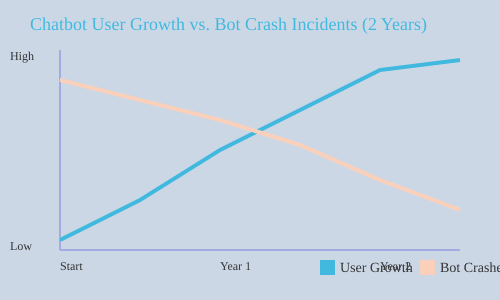
Research shows that scalability of chatbots is crucial for business growth. In fact, a whopping 70% of businesses end up upgrading their chatbot within two years just to handle more conversations. That’s right—your shiny new bot might be yesterday’s news faster than you can say “auto-scaling.” And if you think this is just scare tactics, consider this: scaling mishaps cause an average of 15% customer churn when bots fail during peak times. Ouch. That’s the kind of churn that keeps business owners up at night, clutching their analytics and reporting dashboards.
So, how do you make sure your bot ages like a fine cheese (the kind people actually want to eat)? First, forecast your growth. Don’t just think about next month—think about next year, and the year after that. Will your bot handle a sudden Black Friday rush, or will it start sending customers cryptic error messages and existential questions? Look for features like auto-scaling, cloud hosting, and modular deployment. These aren’t just fancy terms—they’re your ticket to a future where your chatbot doesn’t melt under pressure.
But wait, there’s more! As you scale, analytics and reporting become your best friends. You need to know what’s working, what’s not, and where your bot is quietly plotting its next meltdown. Proper analytics let you track performance, spot bottlenecks, and make adjustments before things go sideways. Think of it as a health checkup for your digital assistant—minus the awkward small talk.
And let’s not forget about security and compliance. As your business grows, so do the risks. GDPR, CCPA, and other acronyms you never wanted to learn suddenly become very important. Make sure your chatbot is upgradable, secure, and compliant, or you might find yourself starring in your own “bot broke under pressure” horror story.
‘A scalable chatbot is like a loyal dog; it sticks with you even when business booms.’ – Olivia Chen, CTO, Startify
In the end, picking the right chatbot isn’t just about today’s needs—it’s about future-proofing your business for tomorrow’s challenges. Choose a solution that’s robust, adaptable, and ready to grow with you. Because when your business takes off, you want your chatbot to be right there with you—fetching, responding, and never, ever stinking up the place.
When it comes time to choose the right chatbot, it’s essential to understand your specific needs and how a bot can meet them.
TL;DR: If you only have 30 seconds: Picking a chatbot is about knowing your goals, prioritizing must-have features, testing integration (yes, the boring stuff), and never being afraid to ask for a trial. The best chatbot boosts customer connections, supports your team, and (hopefully) never confuses a gnome for a lead.
