
Confession: I once tried to order pizza through a chatbot and ended up with a yoga mat. If you’ve ever wondered how artificial intelligence could possibly understand humans (let alone our hungry cravings or bad puns), you’re in the right place. Natural Language Processing, or NLP if you like sounding in-the-know, is the secret ingredient helping AI crack the code of human speech, context, and—dare I say—flirtation. Let’s dig into how NLP is making machines finally get us… sort of.
1. NLP Decoded: Why Your Virtual Assistant Still Gets Your Name Wrong
Let’s face it: Natural Language Processing (NLP) is the reason your phone thinks your name is “Bob” when it’s clearly “Rob,” and why your virtual assistant sometimes calls your mom when you ask for pizza. But what exactly is NLP, and why does it have such a quirky sense of humor?
What Is Natural Language Processing?
At its core, Natural Language Processing is the magical crossover between linguistics, computer science, and—let’s be honest—pure stubbornness. It’s how computers try to understand, interpret, and even generate human language. NLP powers everything from autocorrect and spam filters to voice assistants like Alexa and Google Assistant. If you’ve ever yelled “No, I said ‘play jazz,’ not ‘call Chaz!’” at your smart speaker, you’ve experienced NLP in action.
Everyday NLP Applications: The Good, the Bad, and the Hilarious
- Autocorrect Fails: Ever texted “meeting with the beard” instead of “meeting with the board”? (Guilty as charged. My boss still asks about my facial hair.)
- Voice Assistants: Ask Alexa to “play The Beatles” and get “beetles facts” instead. Classic.
- Mistranslated Menus: “Fried children” instead of “fried chicken.” Thanks, NLP.
These moments are funny, but they highlight the real challenges in making AI fluent in human.
A Short History: From Rule-Based Robots to Deep Learning Wonders
Back in the day, NLP was all about rules. If you said “Hello,” the chatbot would reply “Hi!”—unless you got fancy with sarcasm or slang, in which case it would short-circuit faster than you can say “LOL.” Rule-based NLP was easily outwitted by anything remotely human.
Enter Deep Learning and transformer models. In 2018, BERT (no, not the one from Sesame Street) burst onto the scene, making NLP models way smarter. Suddenly, AI could handle context, sentiment analysis, and even a bit of sarcasm. By 2023, over half of mobile apps were using NLP-powered features. Still, even the best models sometimes think “wicked” means “evil” when you’re just saying your new sneakers are awesome.
| Year | Milestone |
|---|---|
| 2018 | BERT emerges as a top NLP model |
| 2023 | Over 50% of mobile apps rely on NLP-powered features |
| Top 3 NLP Errors |
|---|
| Misrecognition |
| Context Confusion |
| Accent Misinterpretation |
The Human Factor: Accents, Slang, and Sentiment Analysis
Here’s the kicker: humans are unpredictable. We have regional accents, use slang, and sometimes say “wicked” when we mean “great.” Sentiment analysis—figuring out if you’re happy, sad, or just being sarcastic—remains a huge challenge. No wonder NLP sometimes gets your name (and your mood) wrong.
“When machines finally understand us, they might regret it.” – Dr. Susan Li
So next time your assistant calls you “Steve” instead of “Steph,” remember: Natural Language Processing is still learning to speak human. And honestly, who can blame it?
2. Giant Brains & Global Tongues: The Tech Powering Tomorrow’s NLP
The Rise of Transformer Models: When AI Outwits You at Wordle
Let’s be honest: if you’ve ever lost a word game to your phone, you can probably blame Transformer Models. These digital brainiacs—like BERT, T5, and the mighty GPT-4—have taken over the world of Natural Language Processing (NLP). Gone are the days when computers needed a rulebook thicker than a dictionary just to say “hello.” Thanks to Deep Learning and transformers, AI now understands context, sarcasm, and even your late-night typo-riddled texts.
Transformer models don’t just guess what comes next in a sentence—they predict, interpret, and sometimes even finish your jokes. No wonder they’re setting new accuracy records and making us question who’s really in charge of the conversation.
Multilingual Models: Text Your Cousin in Icelandic (Sort Of)
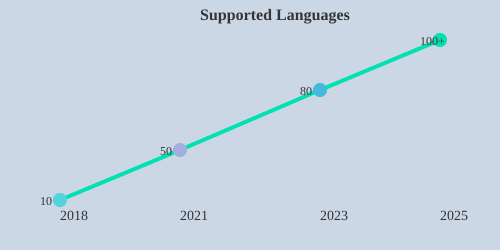
Remember when language barriers meant awkward hand gestures and Google Translate fails? Not anymore. Multilingual Models are here, and they’re the ultimate polyglots. By 2025, most popular NLP models will support over 100 languages and deliver near real-time Language Translation. So yes, you can finally text your Icelandic cousin without accidentally inviting them to a “potato festival” instead of a birthday party.
These models don’t just translate—they bridge cultures, connect businesses, and make the internet feel a little less like a game of broken telephone. As Prof. Ravi Khanna puts it:
“Modern NLP is like a passport for AI—finally letting it speak our language(s).”
Edge NLP: Your Toaster’s Secret Superpower
You might not know it, but Edge NLP is the reason your smart toaster can understand “just a little crispy, please.” By running AI Language Models directly on your device (think DistilBERT or MobileBERT), your gadgets keep your data private and respond faster than ever. No more sending your voice to the cloud just to set a timer—Edge NLP brings the smarts right to your kitchen counter.
It’s not just about convenience; it’s about privacy. Your phone can now translate memes, recognize speech, and even write emails—all without spilling your secrets online.
Progress of Transformer-Based Models (2018–2025)
| Year | Model Milestone | Supported Languages | Translation Accuracy |
|---|---|---|---|
| 2018 | BERT Launch | 10 | 75% |
| 2020 | T5 Launch | 50 | 85% |
| 2023 | GPT-4 Launch | 80 | 90% |
| 2025 (est.) | Edge NLP Models 3x Faster | 100+ | 92% |
Chart: Growth of Supported Languages in Top NLP Models (2018–2025)
3. Fixing Babel: Cracking the Big Challenges in Making AI Actually Listen
Let’s face it: languages are messy. If you’ve ever tried to order a “burger with no onions” in a foreign country and ended up with a plate of pickles, you know the struggle. Now, imagine teaching an AI to handle not just your onion aversion, but every accent, slang, and dialect on the planet. Welcome to the wild world of Natural Language Processing (NLP), where the dream is to make AI actually listen—and not just nod politely while misunderstanding everything.
Low-Resource Language Models: The Underdogs of AI
Most NLP models are like overachieving students who only study the most popular subjects—English, Mandarin, Spanish. But what about the 7,000+ other languages? Enter Low-Resource Language Models like mBERT and XLM-R, which are finally giving some love to underrepresented tongues. Thanks to creative research partnerships, these models are now tackling over 30 “low-resource” languages, expanding digital inclusion and helping underserved populations access information. It’s not perfect yet, but it’s a start—because everyone deserves to ask their smart speaker to play “Despacito” in their own language.
Bias in Model Training: When AI Picks Favorites
Here’s the spicy part: Bias in Model Training. If AI only learns from certain groups, it starts to play favorites—sometimes with embarrassing results. Picture this: An AI-powered drive-thru assistant in Mumbai versus Minnesota. In Mumbai, it might fumble local slang and serve up a “paneer burger” when you wanted a “vada pav.” In Minnesota, it might mishear “pop” as “pup” and hand you a puppy with your fries (okay, not really, but you get the idea). Bias isn’t just awkward—it can be downright unfair.
Ethical AI Practices: More Than Just a Buzzword
Fairness in NLP isn’t just about good PR. Ethical AI Practices mean making sure AI understands everyone, not just the loudest voices in the room. This includes careful data selection, constant bias checks, and transparency about how decisions are made. Because, as Dr. Angela Kim wisely put it:
“If AI begins to listen better than my teenager, I’ll be both thrilled and terrified.”
And honestly, who wouldn’t be?
Industry Impact of NLP: From Hospitals to Hollywood
Despite the messiness, industries are betting big on NLP. Automated customer service is just the tip of the iceberg. By 2025, 51% of healthcare providers are expected to use NLP-driven solutions to decode doctor’s notes and patient questions. Financial services, retail, and even media are all in on the action—because who wouldn’t want a chatbot that actually gets your jokes?
| Industry | Projected NLP Adoption (2025) |
|---|---|
| Healthcare | 51% |
| Financial Services | 62% |
| Retail | 45% |
| Media & Entertainment | 57% |
So, the next time you chat with a customer service bot or binge-watch a subtitled show, remember: behind the scenes, NLP is working overtime to fix Babel—one word, one accent, and one wild drive-thru order at a time.

4. Closing the Loop: What’s Next—Machines With (Actual) Wit?
So, you’ve seen Natural Language Processing (NLP) go from awkward autocorrect fails to writing emails that sound suspiciously like your boss. But what’s next on the wild ride of Natural Language Processing trends? Buckle up, because the future is looking less like a robot reading a script and more like a machine that actually gets your puns—and maybe even remembers your birthday.
Let’s talk about the real game-changers. The best Natural Language Processing models are now learning to do more than just parrot back what you say. They’re starting to remember context, reason through problems, and (brace yourself) attempt humor that isn’t just accidental. Imagine an AI that can summarize your 50-page report, remind you to buy milk, and still have enough wit to roast you in a group chat. That’s not just science fiction—it’s the north star for NLP researchers worldwide.
And here’s a bibliometric surprise: the most exciting breakthroughs aren’t just coming from Silicon Valley. In fact, 60% of top NLP papers in the last five years have been the result of collaborations between researchers in the US, India, and China. The future of AI and NLP opportunities is global, inclusive, and multilingual. So, while you’re busy teaching your AI assistant to pronounce “gyro” correctly, teams around the world are making sure it can do the same in Hindi, Mandarin, and Swahili.
Let’s take a quick look at the numbers:
| Trend | Stat |
|---|---|
| Collaborative NLP research (US, India, China) | 60% of top papers (2019-2024) |
| Business interactions automated by NLP (by 2027) | 80% |
But don’t worry, the future isn’t all serious business. Emerging research trends are pushing for NLP models that can handle the delightful chaos of real life. Picture this: your AI writes the most heartfelt wedding vows you’ve ever heard, but then sends you a grocery list that includes “one dozen existential crises.” Hey, even the best natural language processing models need a sense of humor.
What does all this mean for you? In the next decade, expect AI to become your witty sidekick, not just your digital secretary. NLP will be able to follow instructions like a multitasking parent, summarize complex data in plain English, and maybe—just maybe—laugh at your dad jokes. As Dr. Michael Stern puts it:
“Soon, the biggest challenge will be keeping up with how fast NLP is keeping up with us.”
The bottom line: The future of NLP is a global adventure, filled with smarter, funnier, and more helpful machines. So, get ready for a world where your AI doesn’t just understand you—it might actually make you laugh. Now, if only it could remember where you left your keys.
TL;DR: In a nutshell: NLP is rapidly shaping the future of AI—from real-time translation to smarter chatbots. While we’re not quite at the point where AI can laugh at your dad jokes (yet), the advances are mind-blowing, with a few odd hiccups along the way.